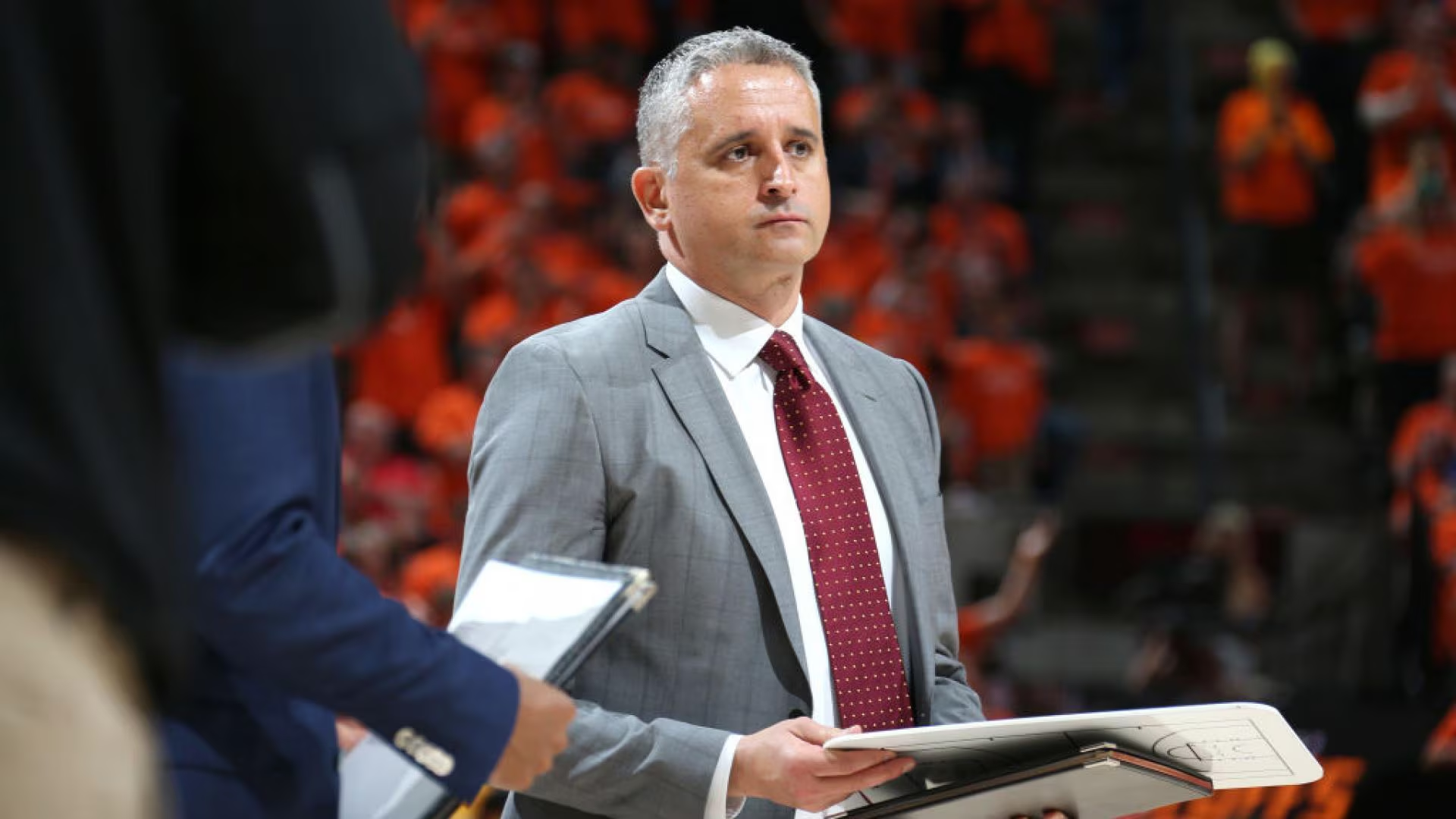
1992–1995
OKK Beograd
The beginning of his coaching career at a very young age. By 24, he became the youngest coach in the top federal league.
NBA · EuroLeague · Georgia · Slovenia · Serbia
Professional basketball coach and the first non-American head coach in the NBA.
More than two decades of work at the highest level of basketball, across the NBA, the EuroLeague, and international competition.
Igor Kokoskov belongs to a rare group of coaches whose careers were not built as an extension of playing fame, but through an early entry into coaching, systematic work, and years of development across different basketball environments.
Born on December 17, 1971, in Banatski Brestovac, Kokoskov grew up within the Yugoslav basketball system, which at the time was one of the most organized and talent-rich in Europe. His playing career ended early after a serious traffic accident, which pushed him toward coaching already in his early twenties.
At just 24, he became the youngest head coach in the history of the former top federal league, leading OKK Beograd. Even at that stage, it was clear that he understood the game in a different way, through structure, system, and player development rather than result alone.
In the late 1990s, he moved to the United States, beginning the process that would define his career. After a stint at the University of Missouri, he entered the NBA in 2000 as an assistant coach with the Los Angeles Clippers, becoming the first coach from this region with a permanent role in the NBA system.
In the years that followed, Kokoskov built a reputation as one of the most respected assistant coaches in the league. He worked for multiple organizations, including the Detroit Pistons, where he won an NBA title in 2004, as well as the Phoenix Suns, Cleveland Cavaliers, Orlando Magic, and Utah Jazz.
His role in those teams was often not the most visible, but it was essential in player development and offensive system implementation. He became especially known for his work with guards and point guards, as well as for developing players through game understanding, not just through physical and technical tools.
Alongside his club career, Kokoskov also built a significant international coaching story. As head coach of Georgia (2008–2015), he stabilized the national team and turned it into a regular participant in major tournaments.
The peak of his national team career came in 2017, when he won EuroBasket as head coach of Slovenia. A team led by Luka Doncic and Goran Dragic finished the tournament unbeaten, leaving one of the strongest impressions in modern European basketball history.
A year later, in 2018, Kokoskov made history as the first coach born and raised in Europe to become the head coach of an NBA franchise, taking over the Phoenix Suns. That formally recognized his decades of work in the NBA through the highest coaching role in the league.
After his NBA head coaching experience, he continued his career in Europe as head coach of Fenerbahce, then returned to the NBA in assistant coaching roles with the Dallas Mavericks, Brooklyn Nets, and Atlanta Hawks. During the same period, from 2019 to 2021, he also led the Serbian national team during a generational transition.
Today, his coaching path continues in the EuroLeague, where he takes over Anadolu Efes, one of Europe’s most important organizations, confirming the continuity of his work at the highest level of basketball.
1992–1995
The beginning of his coaching career at a very young age. By 24, he became the youngest coach in the top federal league.
1996–1999
A period of work and further development that culminated in his move to the United States.
1999–2000
Entry into the American basketball system through college basketball.
2000–2003
His first permanent NBA role. One of the first European coaches in the league.
2003–2008
NBA champion in 2004, finals appearances, and sustained elite results within one of the best-organized systems of that era.
2008–2013
Western Conference Finals in 2010, offensive system development, and extensive work with guards.
2013–2014
Assistant coach during the continuation of his NBA cycle.
2015
Continued work in the NBA environment and player development.
2015–2018
One of the key periods in his tactical development, alongside work with young players and modern playing systems.
2008–2015
Program stabilization and regular EuroBasket appearances.
2016–2017
EuroBasket 2017 gold and a perfect 9–0 record in one of the most dominant tournaments of the modern era.
2018–2019
The first coach born and raised in Europe to serve as an NBA head coach, a turning point in the perception of European coaches.
2019–2021
A period of generational transition and leadership in qualification cycles.
2020–2021
A return to the EuroLeague and work in one of Europe’s most ambitious clubs.
2021–2022
A return to the NBA through a second cycle with elite players.
2022–2023
Continued NBA work focused on player development and tactical preparation.
2023–2024
Continuation of work in the NBA system during a second major cycle.
2025–
Current role at one of the leading clubs in the EuroLeague.
National teams
Kokoskov took on his first major national team project in 2008, when he became head coach of Georgia. At that moment, the team had neither continuity nor a stable identity at major competitions.
Over seven years of work, he introduced order, structure, and competitive relevance. Georgia became a regular participant in the European Championship and a team that understood how it played and what it could expect from itself. It was the first clear proof that he could build a system where none had previously existed.
With Slovenia came a different challenge: the talent was there, but the result was not. At EuroBasket 2017, Slovenia won gold without a loss, playing modern and disciplined basketball, with clear roles and complete control over the tournament’s rhythm.
With a team led by Goran Dragic and Luka Doncic, Kokoskov managed to combine individual quality with collective play in a system that functioned without fluctuation. This remains the greatest result of his career and the moment that confirmed him globally as a top-level coach.
His arrival on the Serbian bench came at a specific moment, between two generations, with high expectations and a complex qualification system. The focus was not on domination, but on managing the process, balancing the roster, adapting to conditions, and maintaining continuity.
Even without a major result, this period showed his ability to lead a team in unstable and demanding circumstances.
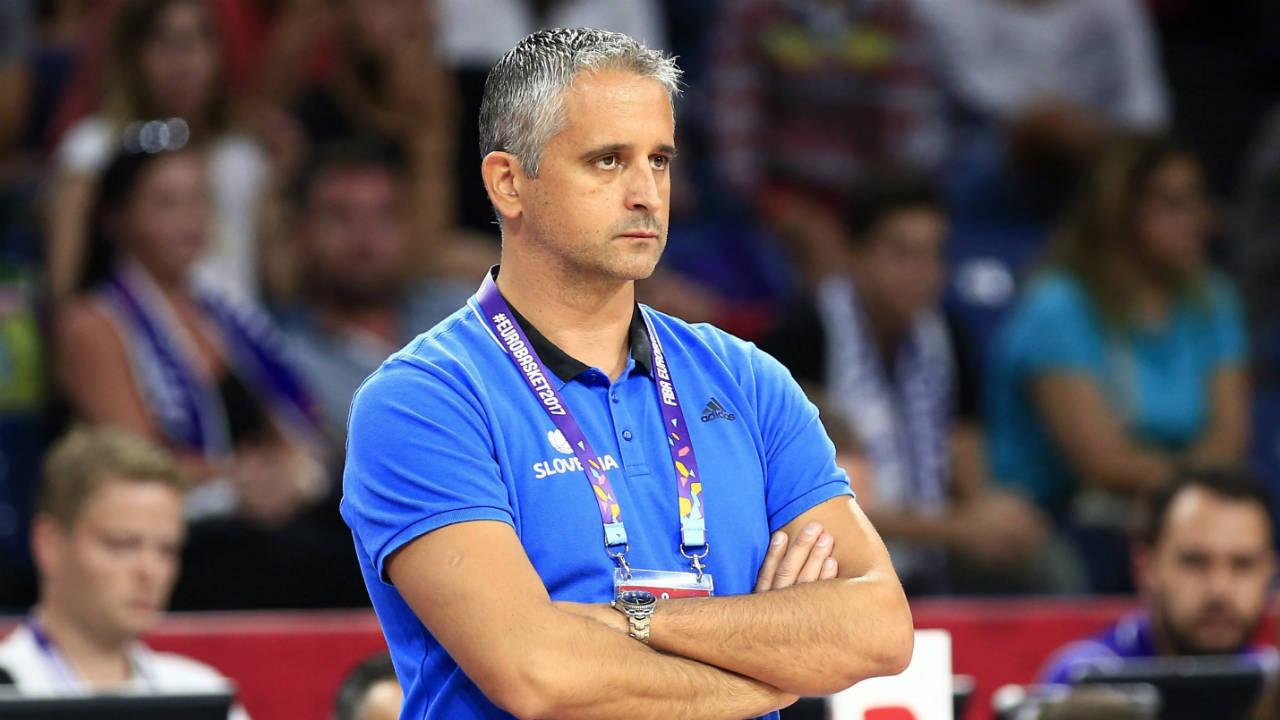
His entry into the NBA in the early 2000s was not only a personal breakthrough, but also a precedent.
At a time when European coaches barely had a place in the American system, he became the first to earn a permanent role on an NBA coaching staff. As an assistant coach with the Los Angeles Clippers, he began a process that would last more than two decades: learning, adapting, and gradually building a reputation in the most competitive basketball league in the world.
His true development came through years spent in different organizations, especially with the Detroit Pistons, where he won an NBA title in 2004 as part of one of the most disciplined teams of that time.
Through his roles in Phoenix, Cleveland, Orlando, and Utah, Kokoskov became a coach organizations relied on for player development and the implementation of modern offensive principles. His role was not always highly visible, but it was fundamental, through work with guards, understanding of the game, and the ability to adapt the system to players rather than the other way around.
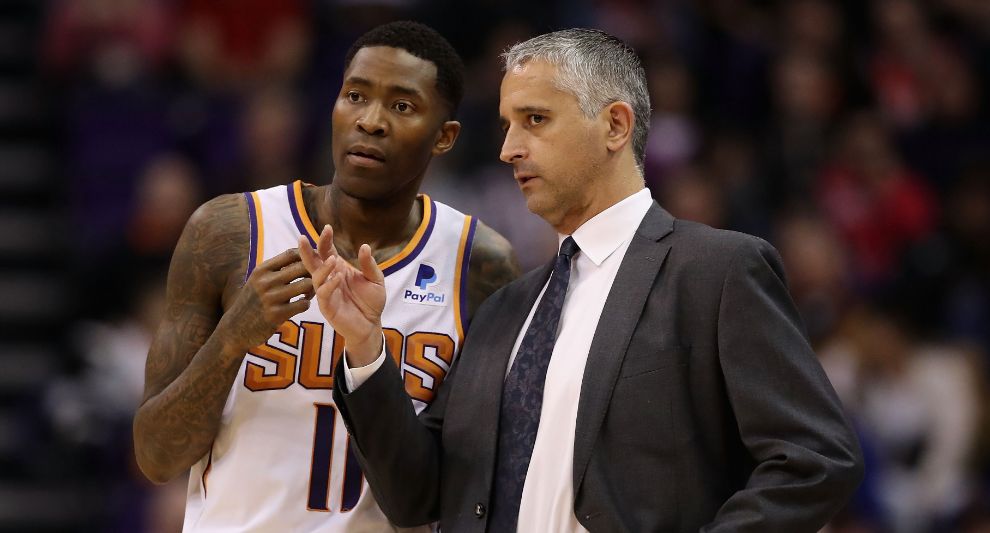
It was in that period that he built a reputation as a coach who makes a difference from within. In 2018 came the key moment of his career: he became head coach of the Phoenix Suns and in doing so the first coach born and raised in Europe to lead an NBA team from that position.
That was not only a personal success, but also a signal of change in how European coaches were perceived in the NBA. His appointment represented the result of long-term work, but also the trust he had built across different organizations and generations of players.
After the head coaching experience, Kokoskov returned to the NBA through assistant coaching roles with the Dallas Mavericks, Brooklyn Nets, and Atlanta Hawks. At this stage of his career, his role became even clearer: working with elite players, tactical preparation, and integrating different playing styles into a functional team.
Kokoskov’s NBA career cannot be reduced to one function or one season. It spans more than twenty years and includes different roles, systems, and generations. Its value lies in that continuity, not as an exception, but as proof of lasting relevance at the highest level of basketball.
Coaching philosophy
System adapted to players
Kokoskov does not force a predefined style of play. He builds
the system around the qualities available on the roster. The
goal is not for players to simply execute a set, but for the
game itself to function.
Focus on decisions
In his teams, decision-making is the key element. Guards and
point guards are given freedom, but also responsibility, to read
the game and react in real time.
Flexibility
He has worked in different environments: the NBA, the EuroLeague,
and national teams. In each case, he adapts his approach while
preserving the same core principle: maximizing the team at hand.
Player development
Years of NBA work shaped him into a coach who improves players.
The emphasis is on understanding the game, not just executing
tasks.
Balance of two systems
His style combines European discipline and American freedom of
play. The result is organized, but flowing basketball.
Quotes
“Basketball is a game of decisions, not actions.”
“I do not try to fit players into a system. I try to build a system that suits them.”
“Good basketball is not when everything goes according to plan, but when players know what to do when the plan stops working.”
“If a player understands the game, he can play in any system.”
“In modern basketball, space and decisions matter more than drawn actions.”
“I have always believed that a coach should prepare players for situations, not for actions. Actions change, situations remain the same.”
“The biggest difference between a good player and a great player is the speed and quality of decisions.”
“The goal is not to control every possession, but to create a system in which players know how to react when things go out of control.”
“Basketball changes, but the essence remains the same: understanding the game and trust among players.”
National team Slovenia 2017, EuroBasket gold and a 9–0 record
NBA Detroit Pistons 2004, NBA champion as assistant coach
Phoenix Head Coach 2018–2019, first European coach in that role
Experience More than 20 seasons working in the NBA system
EuroLeague Fenerbahce 2020–2021 and Anadolu Efes from 2025
International Georgia, Slovenia, and Serbia as national teams
“He understands the game on a different level. He gives players
freedom, but he knows exactly what he wants.”
Luka Doncic
“He believed in us and gave us the confidence to play our game.
That was crucial to our success.”
Goran Dragic
“I learned from him how to read the game and make better
decisions.”
Devin Booker
“He had a huge impact on our offense and player development.”
Quin Snyder
“He is one of the smartest coaches I have ever worked with.”
Rick Carlisle